As seen on I Paper
Having whizzed up on a snowmobile, with the Milky Way unfurled above me, it was time to enjoy several helpings of polenta concia – a creamy take on the dish with melted cheese and butter – at Baita Gimont, a B&B and restaurant high up on the slopes. At night, its distant glow on the knobbly shoulders of the Alps guided me like the North Star.
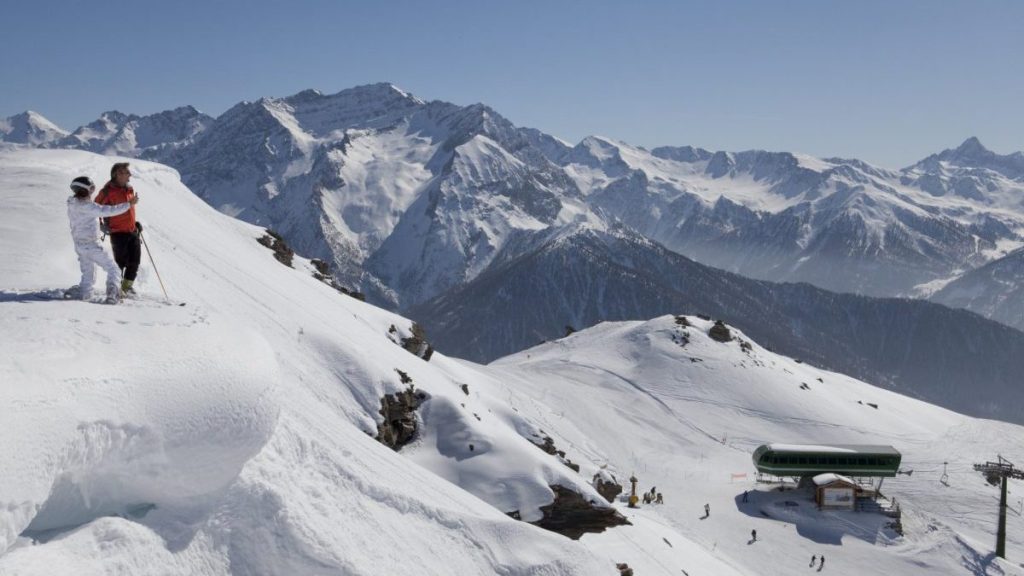
Baita Gimont is one of more than 30 refuges in the Via Lattea, or Milky Way, ski area, which is among Europe’s largest with 250 miles of pistes in the Italian and French Alps. I’m from Piedmont – the northern Italian region that includes most of this area – and I treasure Via Lattea’s modest charm.
As Italy prepares to host the Winter Olympics from 6-22 February – with ski events held in several locations, including the Dolomites resort of Cortina d’Ampezzo, Alpine Livigno and Bormio in Lombardy, and Tesero and Predazzo in the Trentino region – the International Olympic Committee expects at least two million spectators.
As the surge in visitors to host destinations pushes up prices, those seeking an affordable alternative for an Italian ski holiday could try Via Lattea.
In high season, its three-day ski passes are about £70 cheaper than Cortina. Plus, one of its resorts, Sestriere, was rated among the best value in Europe in the recent Post Office Travel Money Ski Report, helped by affordable passes, ski hire, food and drink. Via Lattea is loved by Italian skiers like me who are glad its value for money survived the spotlight of the Winter Olympics 20 years ago, when its slopes hosted several events.
Part of the area’s appeal is the variety of its slopes. Intermediate to advanced skiers have 171 red and 37 black slopes to choose from, while beginners can polish their turns on 96 blues.
Sitting at more than 6,500ft above sea level, Sestriere is one of Via Lattea’s best-known resorts. It buzzes with life from morning, when guests tackle its runs, until evening when après-ski kicks in at places such as La Gargote, a low-key cabin at the foot of the slopes where skiers gather for drinks, music and dancing on the snow. For parties into the early hours, there’s the celebrated Tabata, a chalet-style nightclub loved by locals – and ski instructors.
Lorenzo Masoero, an instructor who has visited the area since childhood, treasures Via Lattea’s sense of community. While some ski areas empty out in the low season, people live in Via Lattea year-round. You see this in Claviere – one of the oldest ski resorts in Italy, and the last village before France.
Claviere has about 200 residents, a supermarket, gift shops and restaurants. Most of its hotels are three-star, including the ski-in-ski-out Hotel Al Foiron, which has a slope-facing terrace. At the time of writing, it had availability in February for a king-room with mountain views for about £1,000 a week, including breakfast. A double room in a similarly rated hotel in Cortina d’Ampezzo this February starts at about £3,000 per week.
Taking a break from the slopes, I tucked into Via Lattea’s inexpensive food scene. A highlight, just a six-minute drive from Sestriere, in an old candlelit “rascard” (a wooden mountain house), is L’Antica Spelonca. Here, you can feast on homemade pasta stuffed with venison for €11 (£9.50), or beef tartare for €16 (£14), in a cobblestoned dining room with open fires.
There’s a keen interest in preserving the region’s heritage. This is most evident, perhaps, in the resort of Sauze d’Oulx. It is known as the “Balcony of the Alps” for its views of the upper Susa Valley’s peaks.
Markers of the town’s history unfolded like a storybook as I was guided around town by Allegra Bermond des Ambrois, whose family holiday home was the birthplace of her ancestor, Luigi des Ambrois, president of the Italian senate after Italy’s unification. Her family’s legacy remains: the street on which the holiday home sits and the local high school both bear the Des Ambrois name.
“For people who don’t want to be surrounded by tourists, Sauze is fantastic,” said Allegra, who spends several weeks a year here skiing, hiking and ski-mountaineering.
It is also the closest resort to the Fréjus Tunnel that connects the area to France. Thanks to Oulx railway station, about 15 minutes by bus from the resort, Sauze is also easily accessible from Turin.
As I walked Sauze d’Oulx’s cobbled streets, passing residents dropping into its grocers and hairdressers, I was reminded why Via Lattea is my favourite place to ski.
 Cecilia Blotto